FoundationPart of the Digestive
Intestine
Intestinum
A folded digestive passage where nutrients are absorbed and the microbiome supports whole-body health.
Explore in 3D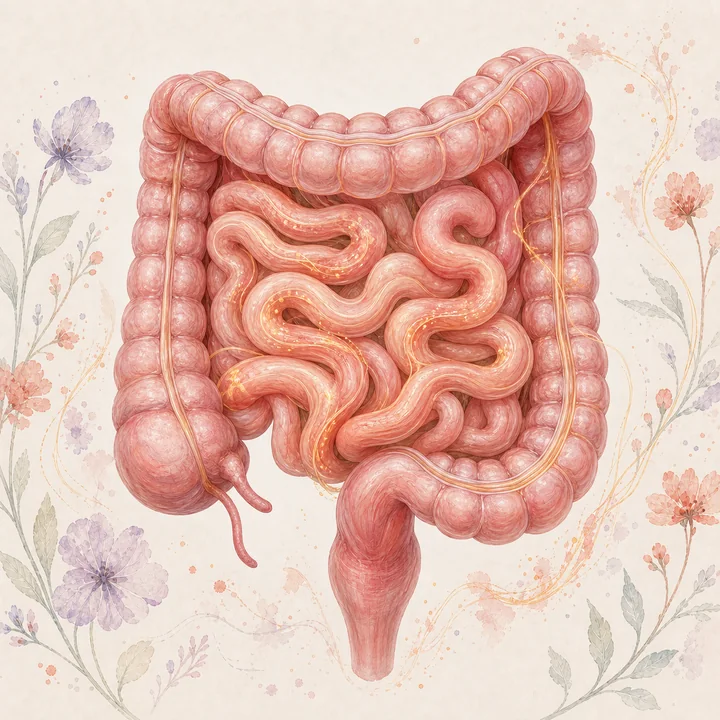
In short
Its surface is amplified by folds, villi, and microvilli.
Its lining renews itself every few days — the fastest turnover of any tissue in the body.
Key facts
- Size
- About 6–7 m when extended
- Weight
- Varies with contents
- Location
- Central and lower abdomen
- Blood supply
- Superior and inferior mesenteric arteries
- Function
- Digestion and nutrient absorption
- Daily
- Hosts trillions of microorganisms
- Tissue type
- Intestinal villi
- Latin term
- Intestinum
Structures to know
7 labelled structures
Duodenum
Duodenum
First small-intestine segment
Open Duodenum in 3DJejunum
Jejunum
Major absorption region
Open Jejunum in 3DColon
Colon
Reclaims water
Open Colon in 3DIleum
Ileum
Final absorption of nutrients
Open Ileum in 3DCaecum
Caecum
Where the large intestine begins
Open Caecum in 3DRectum
Rectum
Holds waste before it leaves
Open Rectum in 3DMesentery
Mesenterium
Suspends the gut and carries its vessels
Open Mesentery in 3D
Numbers at rest
Typical adult values — not a diagnostic reference.
Clinical relevance
Its surface is amplified by folds, villi, and microvilli.
- Irritable bowel syndrome
- Inflammatory bowel disease
- Celiac disease
- Diverticulitis
- Intestinal obstruction
- Colorectal polyps
- Crohn's disease
- Lactose intolerance
Study material only — this is not medical advice or a diagnostic tool.
Study next
Reviewed 2026-08-18 · Structure names follow Terminologia Anatomica (TA2).